From Milligram Label to Household Measure: A Calm UK Method for CBD Dosing
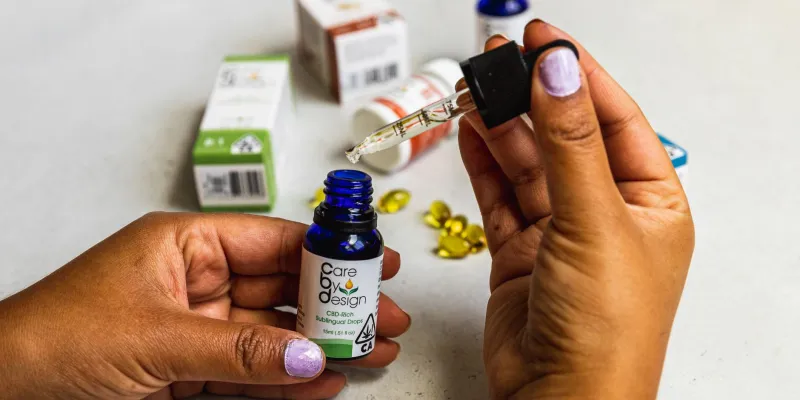
CBD products often arrive with a label that looks precise and a dropper that invites improvisation. The label may state milligrams per millilitre, total milligrams per bottle or milligrams per drop. The dropper, by contrast, offers no universal standard. For UK shoppers trying to use a product carefully, the practical task is not to count drops more diligently but to replace guesswork with a measure that can be repeated.
Why the drop is a poor unit of measurement
A drop feels consistent because it looks like a unit. In practice, drop size varies with the diameter of the dropper orifice, the flexibility of the bulb, the viscosity of the oil, the temperature of the room and the angle at which the bottle is held. A thick oil in a cool kitchen may form a larger, slower drop than a thinner oil in a warm room. Two bottles with similar labels can deliver different amounts per drop, and the same bottle can behave differently over time.
This matters because CBD products are not standardised foods. A person who counts ten drops from one bottle has not necessarily taken the same amount as someone counting ten drops from another. The drop count is a habit, not a calibrated measurement. It can be a convenient starting point for a product with a marked dropper, but it should not be treated as a reliable way to compare products or to track a dose over weeks.
Read the label as a concentration
The more useful figure on a UK CBD label is usually the concentration. A bottle may state 1,000 mg of CBD in 10 ml of oil. That translates to 100 mg per ml, because 1,000 divided by 10 equals 100. A half-millilitre measure would then contain approximately 50 mg, assuming the label is accurate and the product is well mixed.
Other labels state total CBD per bottle without a clear mg-per-ml figure. Some state milligrams per drop, but this should be read with caution because the drop itself is not a fixed unit. If the label is ambiguous, the sensible response is not to guess. Keep the packaging, note the batch number and ask the retailer or manufacturer for clarification in writing. A reputable brand should be able to explain its labelling clearly.
Use a graduated measure, not a kitchen spoon
A household teaspoon is designed for stirring tea, not for measuring oil. The same is true of a dessert spoon. For CBD oils, a small oral syringe with clear millilitre graduations is a more practical tool. Pharmacies commonly stock oral syringes for liquid medicines, and some CBD brands include one with the bottle. A 1 ml syringe with 0.1 ml markings is often easier to read than a 5 ml syringe for small volumes.
If a product comes only with a dropper, check whether the dropper itself is graduated. Even then, a syringe provides a more consistent draw. Keep the syringe dedicated to the product, store it clean and dry, and follow the manufacturer's storage instructions. Do not use a syringe that has held another substance unless it has been properly cleaned and is suitable for reuse.
A simple, repeatable method
First, establish the concentration from the label. Second, choose a conservative volume and keep it consistent for a period rather than changing it daily. Third, measure with the graduated syringe rather than counting drops. Fourth, take the product at a similar time and in a similar way each day, because consistency makes any effect easier to interpret. Fifth, record what was taken.
The record does not need to be elaborate. A notebook or a note on a phone can capture the date, time, product name, batch number, concentration, volume measured and any noticeable effects. Over a week or two, patterns may become clearer. They may also reveal that the product is not suiting the user, which is useful information for a conversation with a pharmacist or GP.
The dose log as a tool for caution
A dose log is not a way to push the amount upwards. It is a way to avoid accidental variation. If a person changes three things at once, such as the product, the volume and the time of day, then any change in how they feel is difficult to attribute. A log encourages one change at a time, and it provides a factual account if medical advice is sought.
It is also worth noting that CBD products are not medicines. They are sold as food supplements or similar products, and they should not be used to replace prescribed treatment. Anyone taking prescription medication, especially medicines with a narrow therapeutic index, should seek advice before using CBD. The same applies to people who are pregnant or breastfeeding, have liver or kidney conditions, or are due to have surgery.
When to ask rather than adjust
Self-adjustment is not always appropriate. If a person experiences dizziness, drowsiness, digestive upset or any unexpected symptom, the reasonable step is to stop and seek advice. If they are taking anticoagulants, epilepsy medicines, sedatives or other regular prescriptions, a pharmacist can review potential interactions. A GP can consider the wider clinical picture. Driving, operating machinery and workplace safety also deserve thought, particularly when a product is new.
The dropper is a convenience, not an instrument. A milligram label is a starting point, not a household instruction. For UK shoppers, the calm approach is to read the concentration, measure with a graduated syringe, keep the routine steady and write down what was done. That method will not make CBD a medicine, but it will make the experience less of a guess.