What the Front Label Will Not Tell You: A UK Guide to Hemp Wording and CBD Content

Photo: Eva Rinaldi, CC BY-SA 2.0, via Wikimedia Commons
The word on the shelf
A UK shopper standing before a shelf of bottles will see the word 'hemp' used with considerable freedom. It may appear in a brand name, in a botanical descriptor, in a wellness claim, or as a quiet suggestion that the product belongs to the CBD category. The difficulty is that 'hemp' is not a specification. It does not, by itself, tell the buyer whether the bottle contains cannabidiol at a meaningful strength, whether it contains only seed oil, or whether the CBD figure has been verified by anyone other than the marketing department.
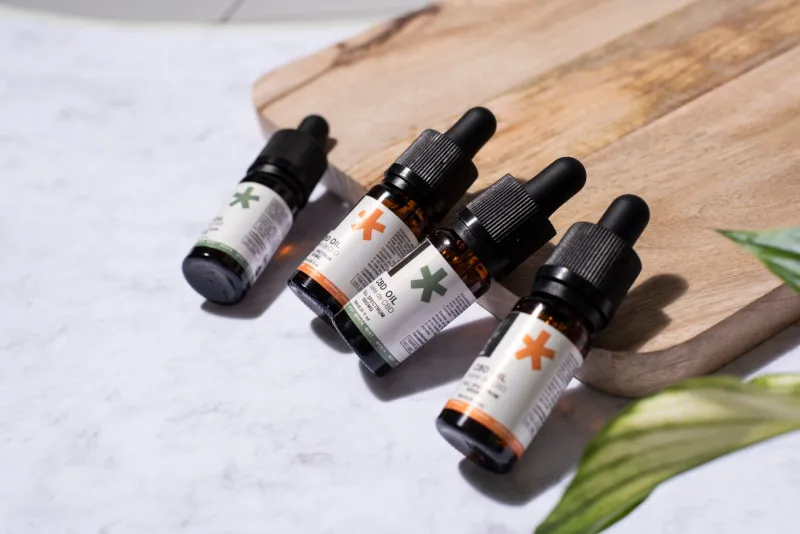
That is not a reason for alarm. It is a reason for reading the label in a particular order. At Hemp & Cannabidiol UK, the practical advice is to treat the front of the bottle as a signpost and the back as the working document. The front may say 'hemp'; the back should say what that means.
Why 'hemp' is a category, not a claim
In ordinary UK usage, 'hemp' refers to Cannabis sativa varieties grown for fibre, seed or other non-intoxicating purposes. That broad meaning is useful in agriculture and confusing in retail. A product described as hemp may be derived from the seed, the stalk, the flower or a combination of plant materials, and those starting points produce very different finished goods.
The word also carries an implied association with CBD. That association is not reliable. A bottle of cold-pressed hemp seed oil can be a perfectly legitimate food oil while containing negligible cannabinoids. A hemp extract may contain CBD, but the term 'extract' does not guarantee a stated strength or a particular spectrum. Terpenes may be added for aroma and flavour, but terpenes are not CBD. A product can be wholly 'hemp' in language and still be the wrong purchase for someone seeking a CBD product with a known milligram content.
Four meanings behind the same word
Hemp seed oil
On an ingredients list, this usually appears as Cannabis sativa seed oil. It is pressed from the seeds and is valued in cosmetics and food for its fatty acid profile. It is not a CBD extract. If a bottle leads with hemp seed oil and gives no milligram figure for cannabidiol, the shopper should assume that CBD is not the product's purpose.
Hemp extract
'Hemp extract' is a broader term. It may describe a preparation made from flowers and leaves, and it may contain cannabinoids, but the phrase does not state which ones or at what strength. In a well-run product, the extract will be supported by a clear CBD content, a serving size and batch documentation. Without those, 'extract' is an ingredient description rather than a purchasing specification.
Terpenes and flavour
Some products mention hemp terpenes or natural flavourings. These can contribute to taste and scent and may be part of a formulated oil. They should not be counted as evidence of CBD content. A label that emphasises terpenes while omitting a milligram figure is describing character, not strength.
CBD products
A genuine CBD product should make the cannabinoid content explicit. In the UK market this normally means a milligram figure on the front or back, a serving size in drops or millilitres, and a statement of CBD per serving. The label may also indicate whether the product is isolate-based, broad-spectrum or full-spectrum. Those terms describe composition and should be consistent with the batch paperwork.
The back label is the working document
The ingredients list is the first place to check. UK cosmetic and food labelling conventions mean that ingredients are listed in descending order of weight, although the CBD figure may sit separately in a nutrition or supplement panel. Look for Cannabis sativa seed oil low in the list rather than at the top if CBD is the intended ingredient. Look for cannabidiol, hemp extract or a named CBD ingredient, and then look for the number that matters.
The milligram figure should be unambiguous. A bottle that states '500mg' without saying whether that is per bottle, per 10ml, per serving or per capsule is not giving the shopper enough information. A 10ml bottle containing 500mg of CBD is a different product from a 30ml bottle containing 500mg, and a capsule containing 10mg is different again from a dropper serving of 10mg.
Batch documentation is the third check. A credible UK brand should be able to provide a batch number and a certificate of analysis from a laboratory. The certificate should correspond to the batch in the shopper's hand and should report cannabinoid content. For CBD products marketed in the UK, it is also reasonable to check whether the product or brand appears in the novel food register. A place on the register is not a guarantee of quality, but an absence of paperwork is a warning sign.
The arithmetic that settles the question
CBD pricing and labelling become clearer when the shopper converts the label into a simple sum. Divide the total milligrams in the bottle by the number of millilitres to get milligrams per millilitre. Then divide by the number of drops or millilitres in the stated serving to get milligrams per serving. This is the figure to compare across products. It also exposes front-label language that sounds impressive but cannot be verified. A large 'hemp' banner means little if the milligram figure is absent or the serving size is vague.
A one-minute check before purchase
- Turn the bottle around. Is there a clear CBD figure in milligrams?
- Does the label state whether that figure is per bottle, per millilitre or per serving?
- Is Cannabis sativa seed oil the leading ingredient, or is a CBD-containing extract named?
- Is the product described only as hemp oil, hemp seed oil or hemp terpenes, with no cannabinoid figure?
- Can the retailer or brand supply a batch number and a certificate of analysis?
- For a CBD product, does the brand appear in the UK novel food register?
If the answer to the first three questions is unclear, the word 'hemp' on the front is doing more work than the evidence on the back. That is the moment to pause, compare another bottle, or ask the retailer a direct question. A genuine CBD product should survive that scrutiny without changing its story.