Beyond the Top Cupboard: Rethinking How UK Households Store CBD

Photo: Ohiamjk, CC BY-SA 4.0, via Wikimedia Commons
A habit disguised as a precaution
There is a particular gesture familiar to anyone who has watched a household absorb a new supplement. The bottle arrives, the householder reads the label, and then the bottle is carried to the highest shelf in the kitchen — the one above the kettle, or the cupboard where the good glasses live. The gesture feels like a decision. In practice it is a habit, and it is often the only safety measure a CBD product will ever receive.
That is less a criticism of the householder than an observation about how these products are sold. A bottle of CBD oil arrives in a cardboard box with a paper leaflet, a dropper, and a label dense with percentages. Nothing in that parcel resembles the child-resistant closures that surround children's paracetamol, and nothing in the buying experience prompts a conversation about household storage. The result is a category of product that sits somewhere between a cosmetic and a medicine in the domestic imagination, and is stored accordingly.
What 'child-resistant' really covers
Packaging described as child-resistant in the UK is generally tested against a recognised standard, most commonly BS EN ISO 8317, which sets out performance requirements for reclosable packages. A container that passes is designed to be difficult for a young child to open within a set time, while remaining manageable for an adult. It is a useful engineering benchmark. It is not a guarantee, and it is not a lock.
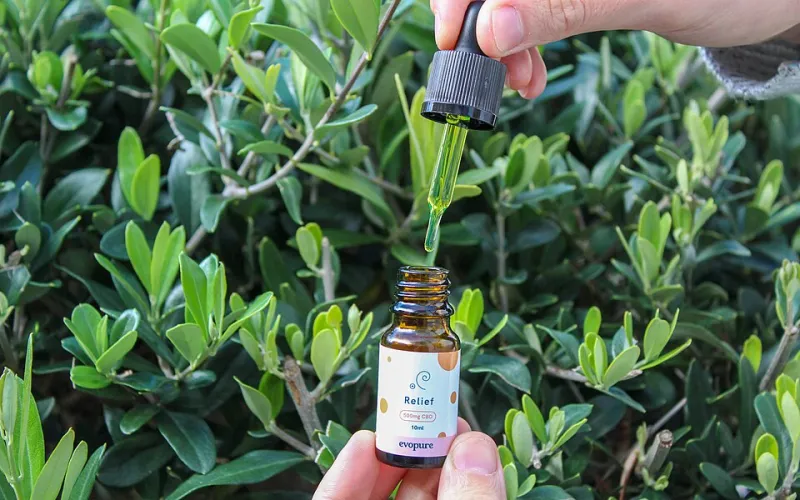
Three practical points follow. First, child-resistant does not mean child-proof; determined children, and children who have watched an adult open the same container many times, defeat these closures more often than manufacturers would like. Second, the protection applies to the container as supplied. Decant a CBD oil into a smaller amber bottle for travel, or tip capsules into a weekly pill organiser, and the certification does not travel with the contents. Third, many CBD formats are not sold in child-resistant packaging at all. Gummy pouches with press-seal tops, glass dropper bottles with a simple screw thread, and single-serve sachets are all common on UK shelves and offer varying degrees of resistance.
None of this argues that CBD products are uniquely hazardous. It argues that the phrase 'keep out of reach of children' is being asked to do more work than a label can reasonably do, and that households need a system rather than a shelf.
The syringe in the drawer
Dosing syringes are among the more quietly consequential items in a CBD household. They are supplied to measure small volumes accurately, they are small, and they are interesting objects to a child. They also tend to be stored separately from the bottle — in a cutlery drawer, in a washbag, on a bedside table — which means that even a well-stored product can leave a residue-coated measuring device in circulation.
A simple discipline helps. Rinse the syringe after use, store it with the product rather than apart from it, and treat it as part of the packaging rather than as kitchen equipment. Where a household contains a toddler, an enclosed container for the whole kit — bottle, syringe, leaflet — is more useful than any individual measure applied to any individual item.
Visitors, handbags and the second household
Household risk is not confined to residents. Grandparents who use CBD, guests who carry a bottle in a handbag, and relatives who leave a pouch on a bedside table during a weekend visit all introduce products into a home that may have no storage routine at all. Handbags are a particular blind spot: they sit on the floor, at child height, and are rarely zipped.
A useful habit for hosts is to offer a shelf rather than a surface. When a visitor arrives with supplements or oils, a brief 'let me put that up here' costs nothing and removes an entire category of accident. The same courtesy applies in reverse when visiting a household with young children, and it is worth extending to anyone who keeps a bottle in a coat pocket rather than a cupboard.
Pets, and the assumption of indifference
Dogs are less discriminating than their owners imagine. A dropped capsule, a gummy left on a low table, or a bottle knocked from a worktop are all accessible events. Human CBD products are not formulated for animals, and the excipients — carrier oils, sweeteners, flavourings — vary widely between brands. Where a pet has taken a product intended for people, the householder's own vet should be the first call; UK veterinary practices can seek specialist advice through the Veterinary Poisons Information Service.
Labels, batch codes and the photograph habit
Most CBD labels carry a batch number and a best-before date, usually printed on the base of the bottle or on the carton in ink that fades under kitchen lighting. Photographing the base of a new bottle at the moment of opening takes ten seconds and preserves the information that matters if a product is later involved in an incident or a query. It also helps once the carton has been discarded and only the bottle remains.
If someone takes the wrong product
The response should be proportionate and quick. If a child has swallowed a quantity of a CBD product, or an adult has taken a dose intended for someone else, the appropriate route in the UK is NHS 111 for advice, or 999 if the person is unwell, drowsy, vomiting or has difficulty breathing. Have the packaging to hand. Do not induce vomiting unless a clinician advises it.
It is worth being candid about why the packaging matters. CBD products sold in the UK are not uniformly what their labels say: sampling by regulators and by independent testing organisations has repeatedly found discrepancies between stated and actual cannabinoid content, and some products have contained trace THC. A clinician advising on an accidental ingestion is better served by the actual batch than by an assurance that the product was 'just CBD'.
A short household audit
Four questions, asked once, cover most of the ground. Where is the product stored, and is that the same place every day? Is the dosing device kept with it? Is the container the one the product arrived in, or a decant? And who else — visitors, children, pets — moves through the space where it lives?
A high shelf answers only the first. The rest of the system is what stops a sensible habit from hardening into an assumption.