The Brownie Has No Certificate of Analysis: CBD Baking and the Illusion of the Milligrams-Per-Slice Label
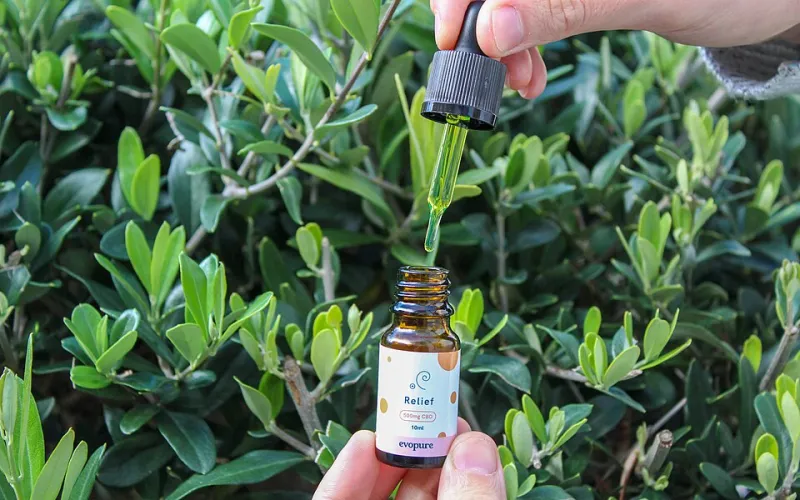
Photo: Evopure, CC BY-SA 2.0, via Wikimedia Commons
Home baking has always been a way to make a routine feel more deliberate. For some CBD users, the appeal is obvious: add a measured amount of oil or isolate to a familiar brownie or flapjack recipe and divide the tin into portions. The logic seems tidy. The kitchen, however, is not a laboratory, and a baking tin is not a volumetric flask. The central problem is not that CBD cannot be put into a cake. It is that a home baker cannot credibly promise a precise milligram dose per slice.
Heat is a variable, not a switch
Cannabinoids are not inert under baking conditions. A typical domestic oven runs at 160–180°C, and batter or dough may spend 20–45 minutes at those temperatures. Heat, oxygen and moisture all act on the CBD ingredient. Some cannabinoid may be lost through degradation, oxidation or evaporation; the amount and rate depend on the form of the ingredient, the carrier, the recipe, the tin, the oven and the time. There is no simple conversion factor that turns a labelled milligram figure into a post-bake figure. A baker can say that the finished product contains less CBD than went in, or that it may contain less; they cannot say exactly how much remains without testing the finished batch. That distinction matters because a label on a home-made brownie is a claim, not a measurement.
Fat is a carrier, not a guarantee
CBD is lipophilic, which is why oils and butters are common carriers in commercial products. In baking, fat can help distribute a CBD ingredient through the batter, but distribution is not the same as uniformity. An oil added to melted butter may seem to mix evenly; a powder stirred into flour may not dissolve. Viscosity, temperature and mixing time all affect how the ingredient is dispersed. Once the batter is poured, portions near the edge, the centre or the top may not carry the same amount. A brownie cut into twelve squares is twelve servings by geometry, not twelve equal doses by chemistry. The same applies to cookies, flapjacks and traybakes: the nominal division is a kitchen convention, not an analytical result.
The arithmetic on the label is not the arithmetic in the tin
A common home-baking calculation goes like this: a bottle labelled as containing 500 mg CBD is added to a batch that yields twelve portions, so each portion contains about 41.7 mg. The arithmetic is correct only if the entire labelled content is present, evenly distributed and stable through baking. Each of those conditions is doubtful in a domestic kitchen. The bottle label may state a target or a batch value; it may not reflect the exact content of the bottle in your cupboard. The ingredient may not mix uniformly. The oven may reduce the content. And the portion size may vary. The result is an estimate with a wide margin, not a dose. For anyone who needs to know how much CBD they are taking, a baked good is a poor delivery format. If precision matters, a product with a stated per-serving content and batch verification is a more defensible route.
What to ask about the CBD ingredient
Before baking with CBD, the ingredient deserves the same scrutiny as any other food input. Ask what the product is: an isolate, a broad-spectrum extract or a full-spectrum extract. Ask what carrier it uses and whether the label states CBD content per bottle or per millilitre. Ask whether there is a batch-specific certificate of analysis from a laboratory, and whether it covers cannabinoid content, residual solvents, heavy metals, pesticides and microbial contamination. Ask whether the product is on the UK novel food register and what that entry actually means; a place on the register is not the same as a finished authorisation. Ask about THC content, because UK limits apply to commercial CBD foods. These questions do not make home baking precise, but they reduce the chance that an unknown ingredient is being treated as a known one.
Where UK food law draws the line
In the UK, CBD extracts used as food ingredients are subject to the novel food regime. Placing them on the market as food requires authorisation, and the FSA's register is a starting point for checking whether a product has a credible application, not a guarantee of approval. Home baking for your own household, or giving a slice to a friend, is not normally a commercial placement. But the picture changes if you sell the bake, take orders, run a market stall, supply a café or organise a bake sale as a business activity. At that point you are in food business territory, and the CBD ingredient needs to be a permitted novel food. Food safety, allergen information and traceability also apply. A home baker should not describe a CBD brownie as treating a condition, and should not present a homemade milligram figure as if it were a verified label.
A sensible approach for home bakers
If CBD is going into a home baking recipe, treat the result as a food that contains an approximate amount of CBD, not as a dosed product. Keep the ingredient label and batch details. Record the recipe, the quantity used and the yield. Tell anyone you serve it to that it contains CBD and that the per-portion amount is not verified. Do not serve CBD bakes to children, pregnant or breastfeeding people, or anyone taking medication without advice. Do not use baking as a way to disguise an unknown dose. And do not assume that a low oven temperature, a long bake or a particular fat makes the outcome predictable. The oven is not a dosing pipette; it is a heat source with variables.
None of this means CBD cannot be used in home baking. It means the claim should match the method. A baker can make a pleasant brownie and can say it contains CBD. A baker cannot, from a domestic kitchen, promise a precise milligram dose per slice. That is the difference between cooking and compounding.