A Place on the List Is Not a Verdict: How UK Shoppers Should Read the CBD Novel Food Register in 2026
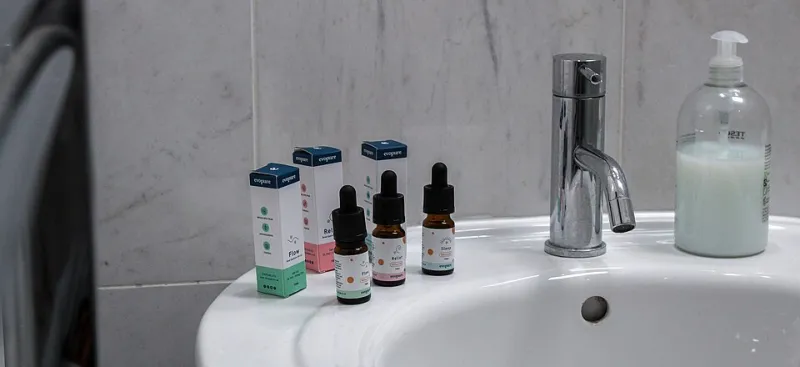
Photo: Evopure, CC BY-SA 2.0, via Wikimedia Commons
The UK CBD shelf is crowded with bottles that look reassuringly similar: amber glass, dropper caps, careful typography and a promise of calm. Behind the counter, or on a retailer's website, another kind of reassurance is often offered: the product is 'on the FSA list'. For many shoppers, that phrase has become a proxy for safety, quality and legality. It is none of those things on its own.
The list in question is the Food Standards Agency's public register of novel food applications for CBD extracts. It is an important document. It tells you that a company has engaged with the regulatory process, and it can help you understand the status of an application. But it is not a product approval, a laboratory certificate or a guarantee that the liquid in the bottle matches the label. In 2026, reading it well means reading it modestly.
What the register actually records
CBD extracts used in food and food supplements are treated as novel foods in the UK because there is no evidence of significant consumption before May 1997. That means they require authorisation before they can be lawfully marketed. The FSA's register is the public window onto that process. It lists applications, applicants and their progress through validation, safety assessment and, eventually, a decision.
The crucial word is application. A register entry is not the same as an authorisation. It is a record that a company has submitted paperwork and that the regulator is, or has been, considering it. The register may also show applications that have been withdrawn, refused or are waiting for further information. A shopper who sees a familiar brand name on the list has learned something about the company's regulatory activity. They have not learned that a particular bottle is safe, accurately labelled or legally compliant in every respect.
The meaning of 'awaiting authorisation'
'Awaiting authorisation' is the phrase that causes most confusion. In plain English, it means the application has not yet completed the full safety assessment and authorisation process. It is a waiting room, not a clean bill of health. Depending on the application's history and the transitional arrangements that have applied to the CBD sector, some products may remain on sale while an application is assessed. That is a regulatory holding position, not an endorsement of the product's quality.
This distinction matters because shoppers often collapse three separate questions into one: Is the company on the register? Is the product authorised? Is the product well made? The answers can differ. A company may have a valid application for one formulation while selling another. A brand may be listed as an applicant while its products are manufactured by a third party with different quality controls. A product may be absent from the register yet still appear on a shelf, which should prompt questions rather than assumptions.
Why familiar names sit in limbo
The CBD sector has spent years in regulatory transition. Applications can be complex, costly and slow. Companies may submit dossiers for a core extract or a range of products, then reformulate, rebrand or change suppliers. The register may list an applicant rather than every stock-keeping unit. It may show an application that has been paused while the FSA requests more toxicological or compositional data. None of this is necessarily sinister. It is the ordinary friction of a novel food process meeting a fast-moving consumer market.
There is also a commercial reality. Some brands are white-label operations; the name on the bottle may not be the name on the application. Others are importers relying on a supplier's dossier. A shopper who wants to understand the regulatory position should therefore look for the exact applicant name, the product type and the current status, not simply a logo or a marketing claim. The register is a starting point for due diligence, not the end of it.
A list entry is not a label audit
The FSA register does not tell you how much CBD is in the bottle. It does not tell you whether the THC level is within the UK limit. It does not tell you whether the product has been tested for heavy metals, pesticides, solvents or microbial contamination. It does not tell you whether the label's serving advice is sensible or whether the batch certificate is genuine. Those are quality and verification questions, and they require different evidence.
This is why the register should be read alongside, not instead of, the label and the laboratory paperwork. A product can be part of a credible regulatory process and still be poorly made. Equally, a missing entry is not proof of harm; it is a reason to ask why. The calm position is to treat regulatory status and product verification as two separate checks, both worth making.
Practical questions for the shelf
Before buying a CBD product in the UK in 2026, consider asking the retailer or checking the brand's website for the following. First, is the exact product or applicant on the FSA register, and what is the current status? Second, can the brand provide a batch-specific certificate of analysis from an independent laboratory? Third, does that certificate show cannabinoid content and contaminants, not just a passing logo? Fourth, who is the UK responsible person or importer, and how can they be contacted? Fifth, does the label avoid medicinal claims and give clear, proportionate serving advice?
If a product is not on the register, ask the retailer why. There may be a legitimate explanation, such as a recent reformulation or a pending application, but the answer should be specific. If a product is on the register, resist the urge to treat that as the final word. Ask for the batch certificate. Check the date. Look at the label. A register entry is a piece of regulatory context; it is not a substitute for evidence about the product in your hand.
What the 2026 position does not settle
The current position does not mean that every listed CBD product has been proven effective for any health purpose. It does not mean that all products on sale are authorised. It does not mean that the UK market is fully settled. The FSA process continues, and the register will change as applications progress, stall or conclude. Shoppers should check the date of any list they are shown and be wary of brands that present an application as though it were an authorisation.
Nor does the register resolve the wider evidence question. The clinical evidence for CBD in specific conditions varies in quality and scope, and it should be discussed with a healthcare professional where relevant. Regulatory paperwork is about market access and safety assessment, not about proving a wellness claim. Keeping those categories separate is part of buying responsibly.
A calmer way to shop
The most useful mindset for 2026 is neither cynicism nor blind trust. The novel food register is a legitimate source of information, and shoppers should use it. But it answers a narrow question: what is the status of a company's application? It does not answer the broader question: is this a well-made product that matches its label and suits your circumstances?
Read the list. Ask for the batch certificate. Check the label. Speak to a pharmacist or clinician if you are unsure. A place on the register is not a verdict on the bottle, and a bottle is not a verdict on the evidence. The sensible shopper keeps those distinctions in view, and treats the waiting room for what it is: a stage in a process, not a seal of approval.