Where the Plant Actually Grew: Auditing Britishness Claims in the UK CBD Aisle
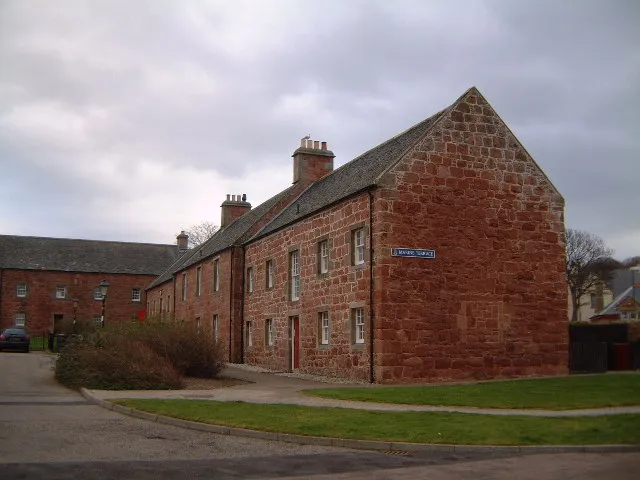
Photo: Lynette and Malcolm Johnson, CC BY-SA 2.0, via Wikimedia Commons
One sticker, several possible meanings
'Made in the UK' is a reassuring phrase. It suggests local agriculture, domestic manufacturing, shorter supply chains and a brand that can be held to account. In the CBD aisle, however, the phrase can describe several quite different realities. A product may be grown, extracted, formulated, filled and packed in the UK. Or it may be packed here from imported isolate, with the British contribution limited to the bottle and the label.
Neither arrangement is inherently dishonest. The problem is ambiguity. Provenance claims are often presented as a single virtue, when in fact they are a series of separate facts about a chain that runs from a field to a filling line.
Four different claims hiding under one sticker
The first is grown in the UK. This refers to the hemp biomass itself. Industrial hemp cultivation in the UK requires a licence from the Home Office, and the plant is grown under conditions designed to keep THC content low. A genuine 'British-grown' claim should be traceable to a farm or grower, and ideally to a licence holder.
The second is extracted in the UK. This refers to the processing step that turns biomass into an extract, distillate or isolate. Extraction requires equipment, expertise and solvent handling. Some UK brands operate their own extraction; others buy extract from elsewhere and blend it here.
The third is formulated or filled in the UK. This is often what 'made in the UK' actually means. A company may import CBD isolate or distillate, combine it with a UK-sourced carrier oil, fill bottles and apply labels at a domestic facility. The final product is British-made in a narrow but legitimate sense.
The fourth is packed or distributed from the UK. This is the thinnest claim of the group. It may mean little more than a warehouse and a postal address. It is not irrelevant, but it says nothing about the plant, the extraction or the quality of the contents.
The chain, step by step
The CBD supply chain has a small number of recognisable stages. Hemp is cultivated and harvested. The biomass is dried and processed. Cannabinoids are extracted, often with ethanol, supercritical carbon dioxide or hydrocarbon solvents. The resulting extract may be winterised, decarboxylated and distilled. It may then be formulated into oils, capsules, gummies or topicals, filled into retail packaging and tested before release.
Each stage can happen in a different country. Hemp may be grown in Eastern Europe and extracted in the Netherlands. Isolate may be produced in China and formulated in the UK. A British brand may source American biomass. None of this is unusual in a globalised market, and none of it automatically indicates lower quality. But a provenance claim that does not distinguish between these stages is doing less work than it appears to.
What UK law does and does not certify
UK law regulates several parts of this chain, but not in a way that creates a single 'British quality' mark. Hemp cultivation is licensed. CBD products intended for human consumption are treated as novel foods, and the Food Standards Agency maintains a public register of products for which authorisation has been sought. That register is product-specific, not brand-specific, and inclusion is not a guarantee of quality or of UK origin.
Advertising claims are subject to the Advertising Standards Authority's rules, and general consumer protection law applies to misleading statements. Trading Standards can act on provenance claims that are demonstrably false. But there is no routine inspection that verifies every 'British hemp' label, and no single certificate that proves a product's entire journey.
This matters because shoppers sometimes treat Britishness as a proxy for safety. It is not. A UK-packed product made from imported isolate can be excellent, and a British-grown product can still be poorly tested. Provenance and quality are related questions, but they are not the same question.
Questions that produce useful answers
A vague claim deserves a specific question. The following are worth sending to any brand that leans heavily on Britishness.
- Where was the hemp grown? Ask for a county, a farm name or a grower relationship. If the answer is 'Europe', the product is not British-grown in any meaningful sense.
- Who extracted the cannabinoids, and where? Extraction is the step most often outsourced. A brand that does not know where its extract comes from is not in control of its supply chain.
- What form is the CBD in before formulation? Isolate, distillate, full-spectrum extract or something else? This affects both the cannabinoid profile and the traceability story.
- Where was the product filled and packed? Ask for the address of the filling facility, not just the registered company address.
- Which laboratory tested the batch, and can you see the report? A UK laboratory is not automatically better than a foreign one, but the report should be batch-specific and available.
- Does the British claim apply to the CBD or to the carrier oil, the bottle or the label? This single question often clarifies a great deal.
Reading the answer
A confident brand will answer these questions with specifics. It may say that its hemp is grown in Somerset, extracted in Wales, formulated in Yorkshire and tested by a UKAS-accredited laboratory. Or it may say that its isolate is imported from a named supplier, formulated in Manchester and tested batch by batch in the UK. Both answers are honest, and both allow the shopper to decide what matters to them.
A less confident brand will answer with adjectives. It will talk about British heritage, artisan values and a passion for hemp, without naming a farm, a facility or a laboratory. That is not proof of wrongdoing, but it is a signal that the Britishness is doing marketing work rather than descriptive work.
Provenance is a starting point, not a verdict
The origin of a product is worth knowing. It can tell you something about agricultural standards, transport distances, regulatory oversight and the accountability of the brand. But it cannot tell you whether the batch in your hand contains what the label says, whether the THC level is within spec, or whether the product has been tested for heavy metals and pesticides.
Those questions are answered by documentation, not by a flag. The sensible approach is to treat Britishness as one useful data point among several, and to ask for the batch-specific certificate of analysis with the same energy that the label invites you to feel about the countryside. Provenance is a good beginning. Evidence is what finishes the job.