What to Ask at the Pharmacy Till: A Practical CBD Checklist for UK High Street Shoppers
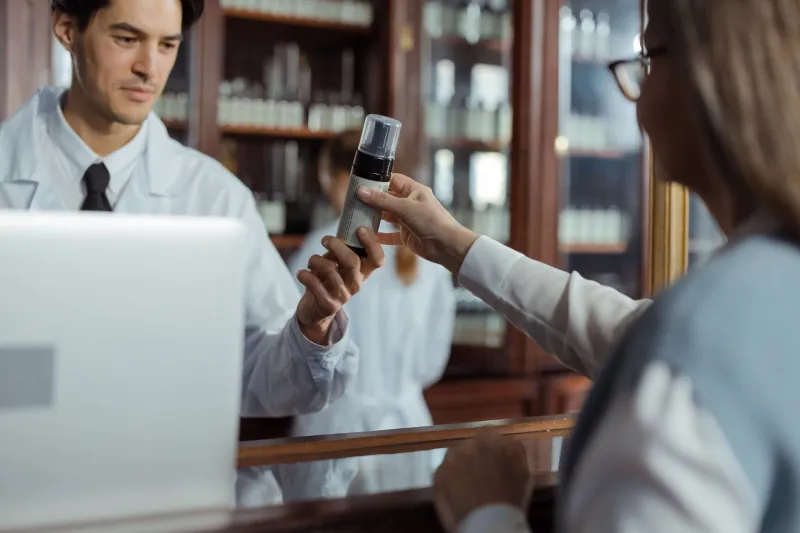
CBD is no longer confined to specialist counters and online storefronts. It appears in high street pharmacies, often beside vitamins and other food supplements, and that setting can create a reassuring impression of oversight. The impression is not entirely misplaced, but it is not a substitute for checking the product in front of you. Pharmacy staff can help with labelling and product information; they cannot turn an unlicensed CBD product into a medicine, and they should not make medical claims for it.
This article is a consumer checklist, not medical advice. It focuses on what a new buyer can reasonably ask at the counter in 2026, and on the answers that separate a clearly documented product from one that relies on atmosphere.
What pharmacy staff can and cannot tell you
A pharmacy is a regulated environment, and its staff are used to handling questions about medicines, supplements and general product safety. For CBD, however, the boundary matters. Most CBD products sold on the high street are food supplements or similar consumer products, not licensed medicines. A pharmacist may be able to explain what the label says, whether the product is presented as a food supplement, and what batch or manufacturer information is available. They may also be able to point you to the pack's ingredients and contact details.
What they cannot do is diagnose a condition, recommend CBD as a treatment, or confirm that a product will work for a particular health problem. Those are medical decisions. The licensed CBD medicine Epidyolex is a prescription product and is not the same as the CBD oils, capsules and gummies sold on the high street. If someone behind the counter makes a confident claim about treating anxiety, pain or sleep, that is a signal to slow down rather than a reason to buy.
How pharmacy CBD differs from vape shop and convenience store stock
A pharmacy may have stricter procurement and a clearer paper trail than a convenience store, but the product category is not automatically different. The same broad types of CBD oil, capsules and edibles can appear across pharmacy, specialist retail and convenience channels. What matters is the individual product and the business behind it, not the till it is sold from.
That is why the counter conversation should be specific. A pharmacy may stock a product with a batch code and a certificate of analysis, or it may stock a festive gift set with a attractive box and very little technical information. A vape shop may hold detailed lab records for a specialist range. The setting is a starting point, not a guarantee.
Five questions to ask before you pay
1. Can I see the batch code and the certificate of analysis for this batch?
A batch code links the pack in your hand to a specific production run. A certificate of analysis, often called a CoA, should show what was tested: cannabinoid content, THC level and, where relevant, contaminants such as heavy metals, pesticides or solvents. A generic certificate that does not match the batch code is weak evidence. Ask whether the certificate is for the exact batch being sold, and whether you can see it before purchase.
2. How many milligrams of CBD are in one dose, and what counts as a dose?
CBD labels can be confusing. A bottle may state a total amount in milligrams, while the serving size is expressed in drops, millilitres or capsules. Ask for the CBD content per dose and per pack. If the product is a 10ml oil containing 500mg CBD, that is 50mg per millilitre; a 0.5ml serving would contain 25mg. The arithmetic matters more than the size of the bottle.
3. Is this product linked to a novel food application on the FSA register?
CBD extracts have been treated as novel foods in the UK since 2019, and edible CBD products need to be linked to a novel food application. The Food Standards Agency maintains a public register. Ask whether the product or its manufacturer appears on that register, and whether the pack carries a novel food application reference. If the answer is vague, treat the product as undocumented until you can check further.
4. What is the THC content, and what is the full ingredient list?
THC should be declared, and it should fall within the legal limits that apply to the product. The full ingredient list should also be available, including carrier oils, flavourings and any allergens. A product that cannot state its THC content or ingredients in plain terms is not giving you the information you need to make a considered purchase.
5. Who is the UK responsible business, and how do I contact them?
The pack should identify a UK business or importer that stands behind the product. A postal address and contact details are basic traceability, not a premium extra. If the only contact route is a social media account, or if the manufacturer is unnamed, the product is harder to follow up if something goes wrong.
A calm conclusion at the counter
A pharmacy can be a sensible place to start a CBD purchase, but the setting should not replace the checklist. The useful questions are unglamorous: batch, dose, novel food status, THC, ingredients and contact details. If staff can answer them clearly, you have a better picture of what you are buying. If they cannot, it is reasonable to leave the product on the shelf and look for one that comes with a clearer paper trail.
None of this amounts to a medical recommendation. It is simply a practical way to shop for a product that should be able to explain itself.