Green Fields, Green Claims: What Hemp Can and Cannot Do for the UK's Environment
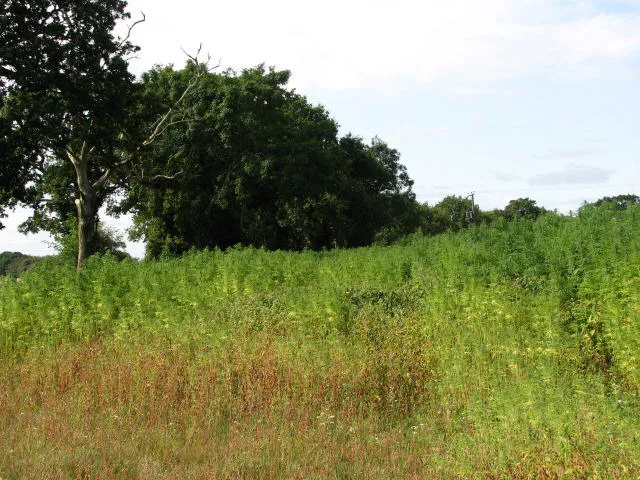
Photo: Evelyn Simak, CC BY-SA 2.0, via Wikimedia Commons
Hemp has a talent for attracting superlatives. It is described as a soil healer, a carbon sponge, a solution to plastic, a route to rural diversification and, in the hands of some wellness brands, a small green revolution in a dropper bottle. Some of these claims are defensible. Others are marketing wearing a lab coat. As UK environmental policy settles into its post-legislative rhythm in 2026, it is worth separating the agricultural case for industrial hemp from the commercial storytelling that has attached itself to cannabidiol.
Two careers, routinely confused
Industrial hemp — the fibre and seed crop — and CBD wellness products are related by species and largely unrelated by economics. Hemp cultivation in Britain requires a Home Office licence, as it has since the crop was relicensed in 1993, and the area grown remains modest by European standards. The fibre goes into insulation, hemp-lime construction, animal bedding, composites and textiles. The seed goes into food and cosmetics. The cannabidiol extracted from flowers and leaves is a separate, higher-value stream that sustains a retail category of its own.
Conflating the two flatters the CBD industry. A field of hemp grown for stalk fibre tells you nothing about the environmental performance of a tincture sold in a plastic dropper bottle, other than that the raw material came from a plant.
The processing gap nobody photographs
The most persistent obstacle to a larger UK hemp fibre sector is not agronomy but infrastructure. Harvesting straw is straightforward; turning it into usable fibre requires decortication, and Britain has limited commercial capacity to do it at scale. The result is that much of the crop's potential value leaves the country as raw material, or is simply underused.
This is an unglamorous point, and it explains why so many sustainability narratives focus on the field rather than the supply chain. Fibre economics depend on short transport distances: hauling low-density straw hundreds of miles to a processor erodes both margin and the environmental case. Until processing capacity grows closer to the farms, the crop's green credentials will remain partly theoretical.
Carbon claims and the permanence problem
It is true that hemp grows quickly and takes up carbon while it does so. It is not true, in any useful sense, that this alone makes a product climate-friendly. What matters is where the carbon ends up. Hemp-lime construction, where the plant material is locked into a building fabric for decades, offers a far more defensible sequestration argument than a claim printed on a cosmetic box. Annual crops that are harvested, processed and broken down return much of their carbon reasonably quickly.
The Competition and Markets Authority's Green Claims Code requires businesses to substantiate environmental statements, to be specific rather than vague, and to consider the full life cycle. A brand that says simply that hemp is sustainable, without qualification, is unlikely to have done that work.
What eco-friendly means on a CBD bottle
Environmental claims in the CBD aisle tend to cluster around four themes: British-grown material, organic certification, packaging and extraction method.
British-grown is a genuine selling point where it can be evidenced, but it is not automatically lower-impact. Organic certification from a recognised UK control body is verifiable and meaningful. Packaging claims deserve scrutiny: a recyclable cap on a non-recyclable laminate pouch is a gesture, not a solution. Extraction method matters too, since supercritical CO2 and ethanol processes differ in energy demand and solvent handling, and few brands publish figures on either.
Questions worth asking
- Where was the hemp grown, and can the brand name the farm or region?
- Which certification body issued the organic status, if any?
- Is the packaging recyclable in kerbside collections, or only in theory?
- Has the company published any life-cycle assessment, however modest?
- Are environmental claims specific and time-bound, or general and atmospheric?
A brand that answers these plainly is telling you something about its operating culture. One that responds with pictures of fields is telling you something too.
A realistic role
None of this is an argument against hemp. As a break crop in arable rotation it has real virtues: rapid canopy closure, modest input requirements, and a use for land that might otherwise be fallow. It is not, however, a remedy for soil contamination in the way that is sometimes implied, because the plant's willingness to take up heavy metals is precisely why material grown on polluted land requires careful testing before it enters any product.
In 2026 the honest description of industrial hemp in the UK is this: a useful, underdeveloped crop with a promising future in construction materials and textiles, constrained by processing capacity and uncertain economics. The honest description of most CBD sustainability marketing is something else entirely. Holding the two apart is not cynicism. It is the only way to give the genuinely good claims room to be believed.